
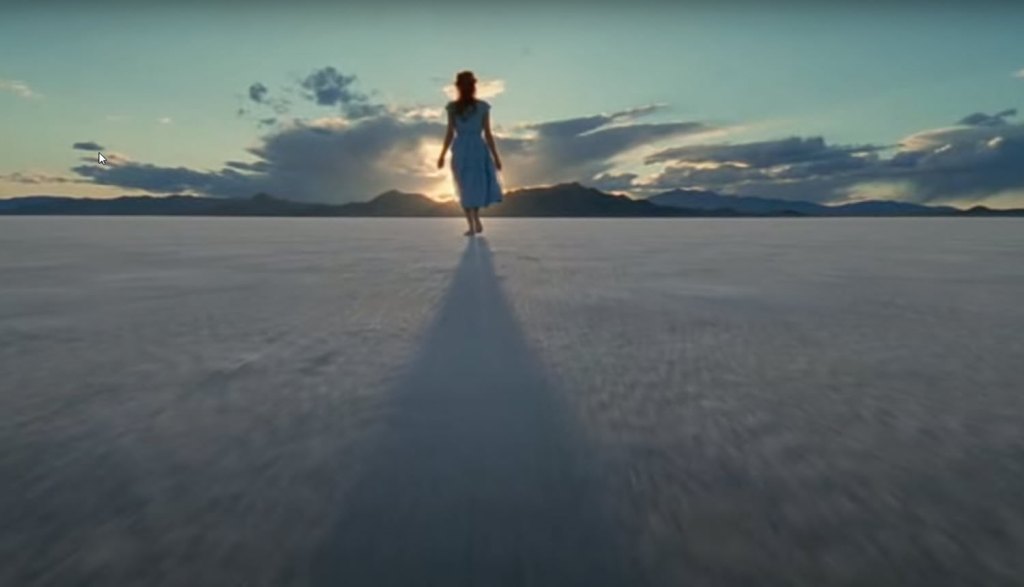
The Tree of Life is a film with some seriously big ideas. Only the fifth offering from one of American Cinema’s most highly regarded auteurs, Terrence Malick’s latest continues his close examination of Man’s turbulent relationship with Nature, while also betraying growing concerns of mortality and his own role within the universe. The Tree of Life was awarded the Palme D’Or at this year’s Cannes Film Festival and while some critics argue that the film falls short of representing the director’s best work, there is no denying its overwhelming visual power, which has drawn welcome comparisons to Noe’s Enter the Void and Kubrick’s 2001: A Space Odyssey.
Viewers looking to catch “the new Brad Pitt film” take heed, as The Tree of Life is a meditation, a visual poem if you will, on the nature of God’s Will and where human beings fit into the Almighty’s Grand Design. Eschewing traditional narrative structure, the film follows Jack (Sean Penn), a middle-aged businessman still struggling with the untimely death of his younger brother many years earlier and we hear his prayers, together with those of his mother and younger self, as he asks God for an explanation. Jack scours his memory for happier moments from his childhood, but not before Malick has treated us to a bravura sequence detailing the creation of the Earth and evolution of the species, from the Big Bang, through the Jurassic period right up to Jack’s birth.
Jack’s parents, played by a never-better Brad Pitt and the almost saintly Jessica Chastain, represent the opposing life paths of Nature and Grace. Pitt is the determined, driven, yet ultimately unsuccessful breadwinner, who struggles to raise his three sons to be strong, independent individuals. He is domineering and abusive, causing the young Jack (impressively portrayed by Hunter McCracken) to fear him but also to lash out in bursts of adolescent defiance and rebellion. Jack repeatedly compares this relationship with God’s role as patriarch and life-giver, only to become increasingly frustrated by the contradictions and lack of answers he encounters. Jack’s mother, on the other hand, is an innocent free spirit, looking only to shower love upon her children and the world around her. While Jack’s love for his mother is strong, he spies a weakness within her, a realization that troubles him even further.
Those needing a rigid three-act structure and clearly defined character arcs will be frustrated by Malick’s loose and cyclical approach, while his theological rhetoric does at times feel naïve, repetitive and cloying. However, the film’s narrative weaknesses are more than compensated for by the audio-visual extravaganza that is the heart and soul of The Tree of Life. If you are willing to surrender to Malick’s Will, the film is a work of resonant ethereal beauty that will haunt you for days afterwards and the big screen is the only way to fully appreciate this singular cinematic poet at work. Just sit back and let it wash over you.


Leave a Reply