
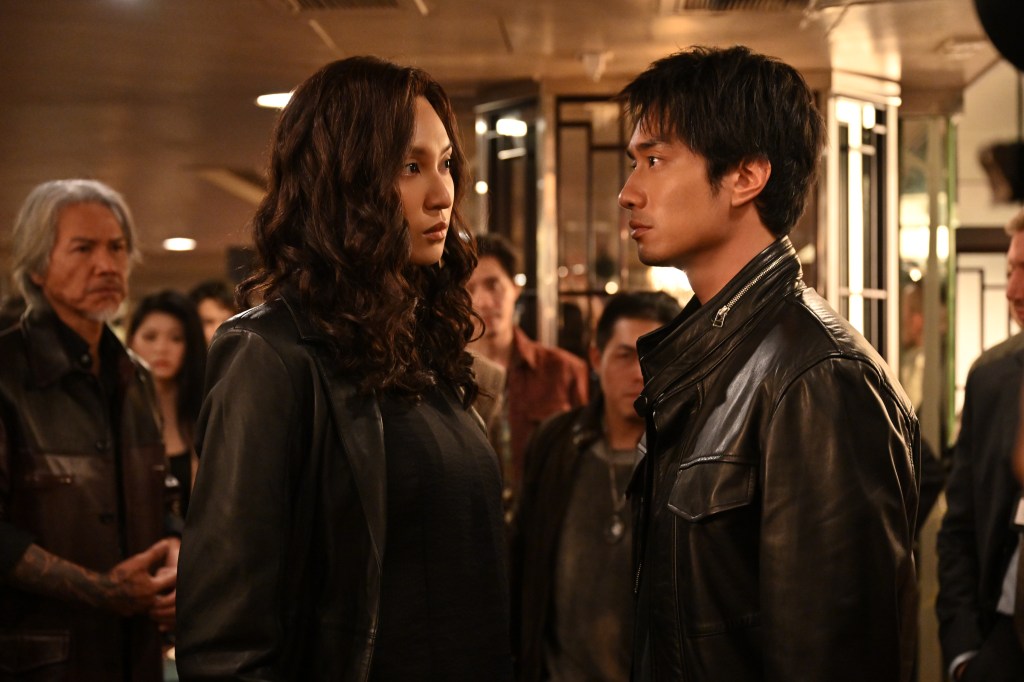
The third instalment in Longman Leung’s sprawling Hong Kong police saga is also the best, delivering an action-packed nostalgia-fuelled thriller that unspools during the city’s giddy pre-handover heyday. Returning stars Aaron Kwok, Tony Leung Ka Fai, and Chow Yun Fat are joined by a gargantuan ensemble cast that includes almost every local actor currently working. Terrance Lau, Daniel Wu, Louise Wong and Taiwanese star Wu Kang-ren are just a few of the standouts in this thrilling stand-off between Hong Kong’s power players and top law enforcers.
Picking up the action in 2017, shortly after the events of Cold War II – which held the title of Hong Kong’s most successful domestic release for more than five years – new Chief Executive-elect Adrian Yip (Louis Koo) plans to include former deputy police commissioner M.B. Lee (Leung) in his cabinet. This prompts councillor Oswald Kan (Chow) and police commissioner Sean Lau (Kwok) to pull Lee’s file and perform a surgical deep dive into their colleague’s past.
Back in 1994, Lee (now played by Terrance Lau) is acting Chief Superintendent working with the OCTB anti-Triad bureau. When he spearheads a drug bust targeting known gangster Tiger Pang (Samuel Pang), his team inadvertently stumbles upon a kidnapping plot that extends way above their pay grade. K.F. Wong (Carlos Chan), chairman of Global Trade Group, has been snatched by Tiger’s gang and they are demanding a $600 million ransom for his safe return.
Wong’s brother-in-law is Sir William Keswyk Poon (Tse Kwan-ho), patriarch of the esteemed Poon family, and head of a consortium of old-school tycoons that has been pulling the strings within the territory for decades. This catastrophe arrives just as they are about to launch their bold new vision that will transform the city into the region’s foremost tech hub. A “cyberport”, if you will.
Poon immediately puts pressure on Police Commissioner Hui (Michael Chow) to retrieve Wong, and reprimand Lee for his reckless antics. Hui hands responsibility over to his second-in-command, Peter Choi (Daniel Wu), who puts Lee on two weeks leave. Hui also unleashes his British Special Branch goons to keep tabs on both Choi and Lee while he scrambles to keep the Poons at bay.
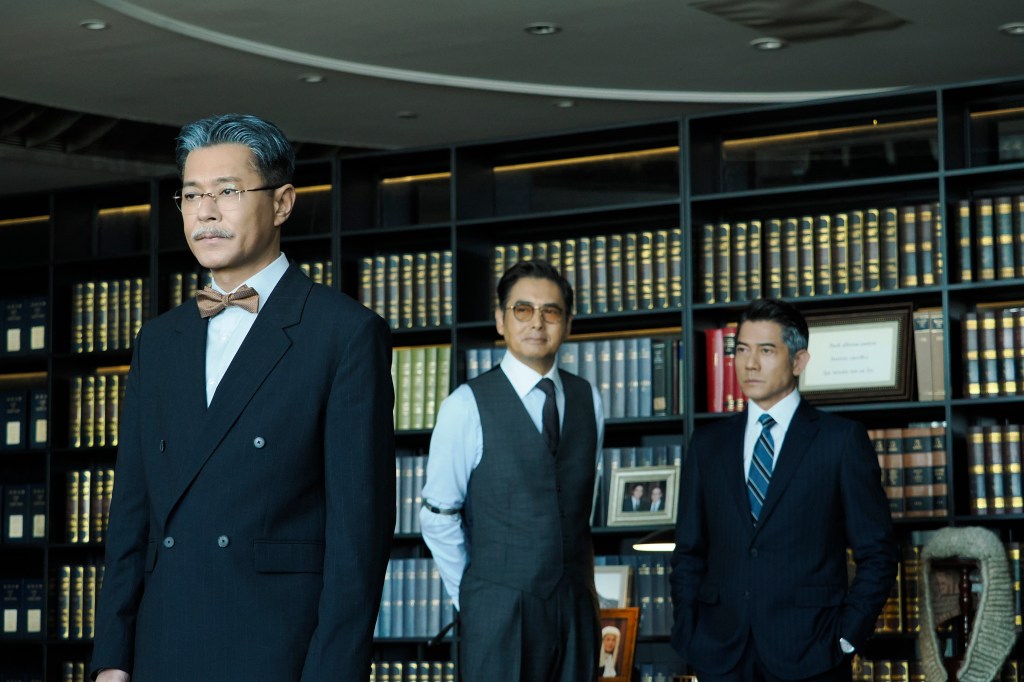
This convoluted set-up unspools at breakneck speed, but once in place, Lee is positioned as a loose cannon with an axe to grind. Having lost one of his men during his botched drug bust, and now officially off the case, Lee goes rogue. He confronts the leadership of the Lo Yuen triad family and demands that they hand over Tiger. But the city’s underworld is also in a state of upheaval. Lo Yuen’s previous boss has died, with the mantle passing to the family’s fiery young heiress, Jodie (Louise Wong). Lee gatecrashes her official installation ceremony, which immediately erupts into violence. Within moments, Lee and Jodie have saved each other’s life and fled the melee together, speeding off into the night on the back of Lee’s motorbike.
For one glimmering instant, Cold War 1994 teases at a desire to escape its trappings as a high-stakes police drama and dissolve into a romantic adventure following these two star-crossed lovers in something that might rival the 1990 Benny Chan classic A Moment of Romance. While the film swiftly checks itself and gets the narrative back on track, that spark of attraction between Lee and Jodie continues to crackle just beneath the surface for the remainder of the film, adding a welcome new dimension to the escalating drama.
Truth be told, Lau and Wong are the undisputed heroes of this overstuffed ensemble, wrestling our attention away from performers wielding many decades more experience, and ensuring the audience is genuinely invested in the well-being of their characters. This is especially true for Louise Wong. Since making the transition from model to actress in 2021’s Anita, when she burst onto the scene with her award-winning portrayal of the late great Anita Mui, Wong has solidified her position as one of Hong Kong’s most exciting young performers, sitting comfortably alongside the likes of Jennifer Yu and Fish Liew (who also appears here – albeit woefully underused – as K.F. Wong’s wife).
After delivering eye-catching supporting turns in Cesium Fallout, Against All Odds (for which she bravely shaved her head), and Night King, Cold War 1994 gifts the actress her best role since that head-turning debut. Jodie “Boss” Yuen is a tough no-nonsense heroine, who instantly proves herself worthy to lead the city’s most notorious crime gang, dispatching adversaries left and right, all while keeping a clear head and – let’s be honest – looking absolutely stunning in the process.
Beyond Lau and Wong, Daniel Wu has a fine old time snarling his way through the action, as the younger version of a character we know from the previous film to be a nasty piece of work. Wu Kang-ren continues to ply his trade this side of the Taiwan strait as Poon’s brattish son Simon, looking to shore up his role in the family’s future plans. Also worth mentioning are Irish actor Aidan Gillen (Game of Thrones, The Wire), who pops up towards the end as MI6’s Asia Bureau head, and Downton Abbey’s own Hugh Bonneville as a Downing Street cabinet minister. In both cases, it is a gratuitous bit of stunt casting that demands precious little of the proven thesps, but their involvement speaks volumes to the scale and perceived ambitions of this production.
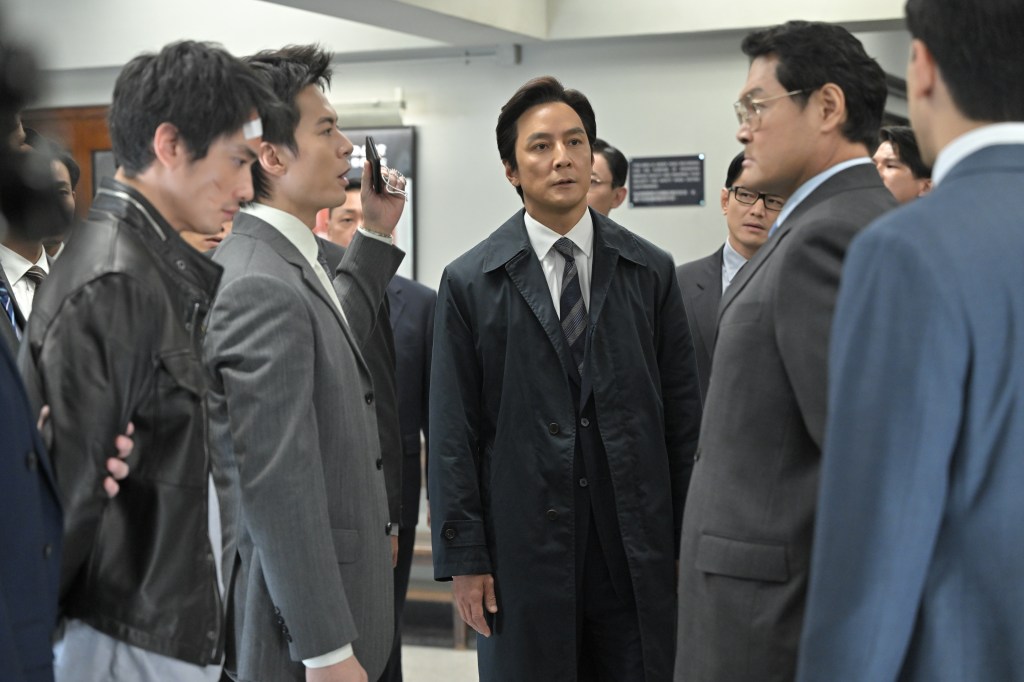
Writer-director Longman Leung, flying solo this time without previous collaborator Sunny Luk, strikes the perfect balance between action, drama, and commentary, while once again tapping into his background as an art director. Taking a page out of Soi Cheang’s Twilight of the Warriors playbook, Cold War 1994 revels in its period setting and looks spectacular throughout. There are a number of eye-popping set-pieces, including numerous shootouts and car chases, which culminate in a truly audacious climax at a rain-soaked Kai Tak airport that goes down as the action pinnacle of the franchise.
Beyond the sheer spectacle, however, the film wisely takes time to indulge the city’s proven nostalgia for its own not-too-distant past. Sets, costumes, and locations all play their part in recreating the mid-nineties in fastidious detail. Winding back the clock to before the end of British rule has become an increasingly common trend in Hong Kong movies of-late for a number of reasons, and Leung’s efforts here are spot on.
For genre movies in particular, setting them prior to 1997 gives the creators a far greater degree of narrative freedom than present censorship constraints will allow in contemporary stories. Initially, this was perceived as something of a cop out, but increasingly, local filmmakers are finding their feet and getting comfortable with the format. By blaming anything negative on the evil British overlords, filmmakers have the perfect “get out of jail free” card to pepper their dramas with corrupt officials, charismatic antiheroes and sympathetic criminals, who aren’t necessary compelled to meet their comeuppance before the credits roll.
There is one moment late on when Chow Yun Fat’s Councillor Kan remarks to Aaron Kwok’s Lau, as they are poring over the case files, that the past reflects the future. He is comparing the events of 1994 with their current problems in 2017, but the interaction will almost certainly leave audiences thinking about today. Similarly, Lee finds himself reunited with his wayward father, played by Yuen Biao, who insists that while everything might appear black and white, a degree of grey-ish compromise between opposing sides is necessary in order to maintain the city’s delicate equilibrium.
Without divulging how things are resolved at the end of Cold War 1994, the city is left poised in a delicate stand-off between the police, the triads, and the wealthy elite, with the suggestion being that all three of these powerful entities have their role to play in maintaining Hong Kong’s prosperous future. The film signs off with a brief tease for Cold War 1995, which appears to have been shot already, confirming Edko’s intentions to let this franchise run and run. If that means that the city – and its film industry – must languish in the nostalgia of past triumphs for a while longer, Cold War 1994 proves that it can do so with dignity, passion, and heaps of style.


Leave a comment